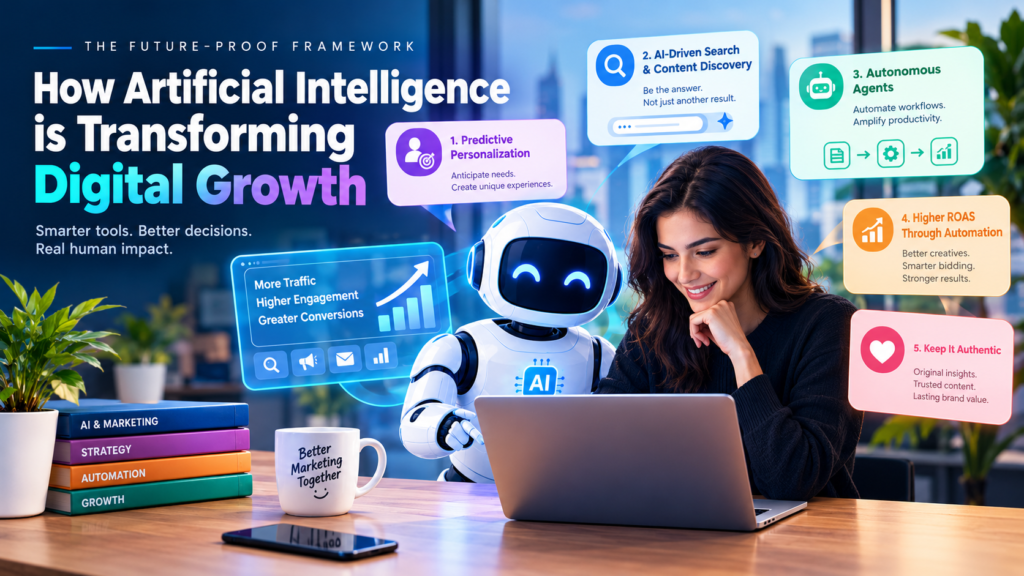
The Future-Proof Framework: How Artificial Intelligence is Transforming Digital Growth
The conversation around technology in business has evolved. We are past the era of treating artificial intelligence as a novelty or an experimental playground. Today, marketing teams are utilizing intelligence systems to handle heavy computational tasks, structure predictive models, and optimize campaigns in real-time.
Yet, true market differentiation doesn’t come from hitting “generate” on a generic script. It comes from knowing how to merge technological scale with distinct human perspective. Let’s break down how modern strategies are adapting to this shift.
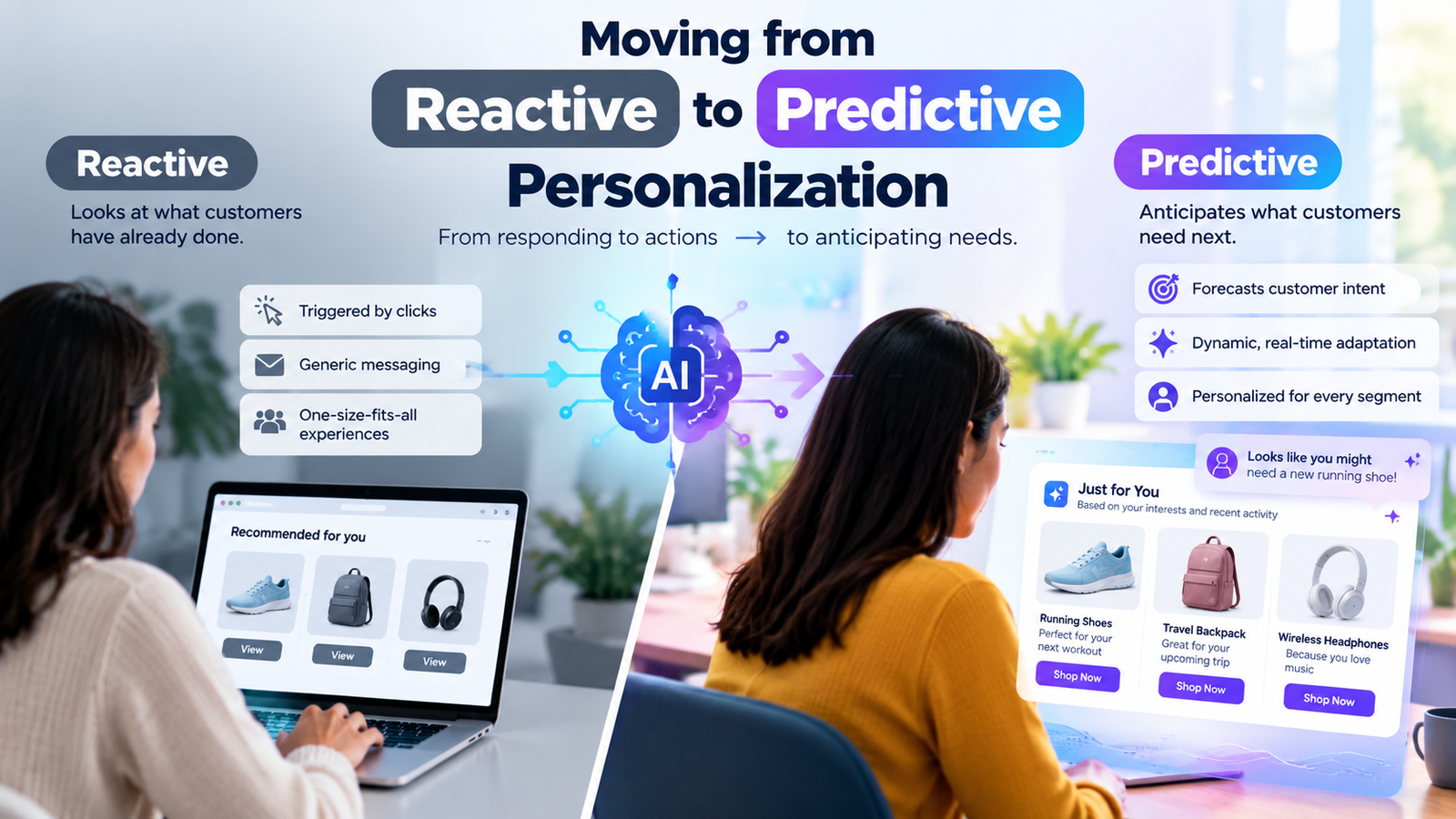
1. Moving from Reactive to Predictive Personalization
Traditional marketing relied on looking backward—triggering an email or showing a product recommendation only after a customer clicked on a link.
-
Anticipating Customer Intent: Modern machine learning architectures analyze behavioral signals and engagement patterns to forecast what a buyer needs before they explicitly search for it.
-
Dynamic Adaptation: Websites, landing page headlines, and tailored outreach elements shift fluidly by segment, creating experiences that feel uniquely individualized rather than mass-produced.
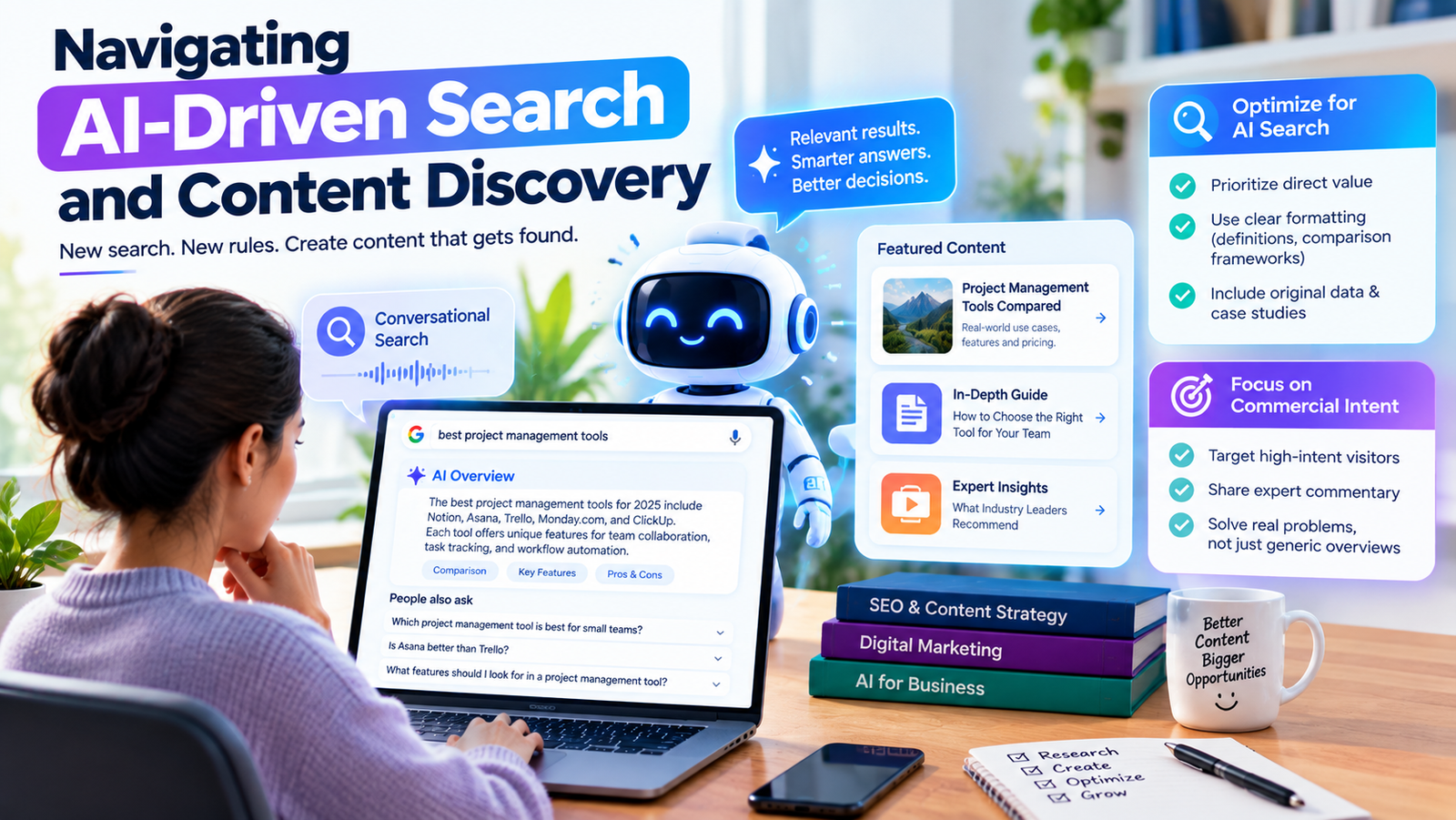
2. Navigating AI-Driven Search and Content Discovery
Search engines have changed how they deliver information. With conversational summaries and AI-generated overviews answering straightforward informational queries directly on results pages, standard informational traffic patterns are shifting.
-
Prioritizing Direct Value: To stand out, content must offer original data points, unique industry case studies, and clear formatting (such as concise definitions and comparison frameworks) that search algorithms can easily reference.
-
Focusing on Commercial Intent: High-intent visitors arrive looking for actionable insights or specialized solutions, making expert commentary far more valuable than broad, generic overviews.
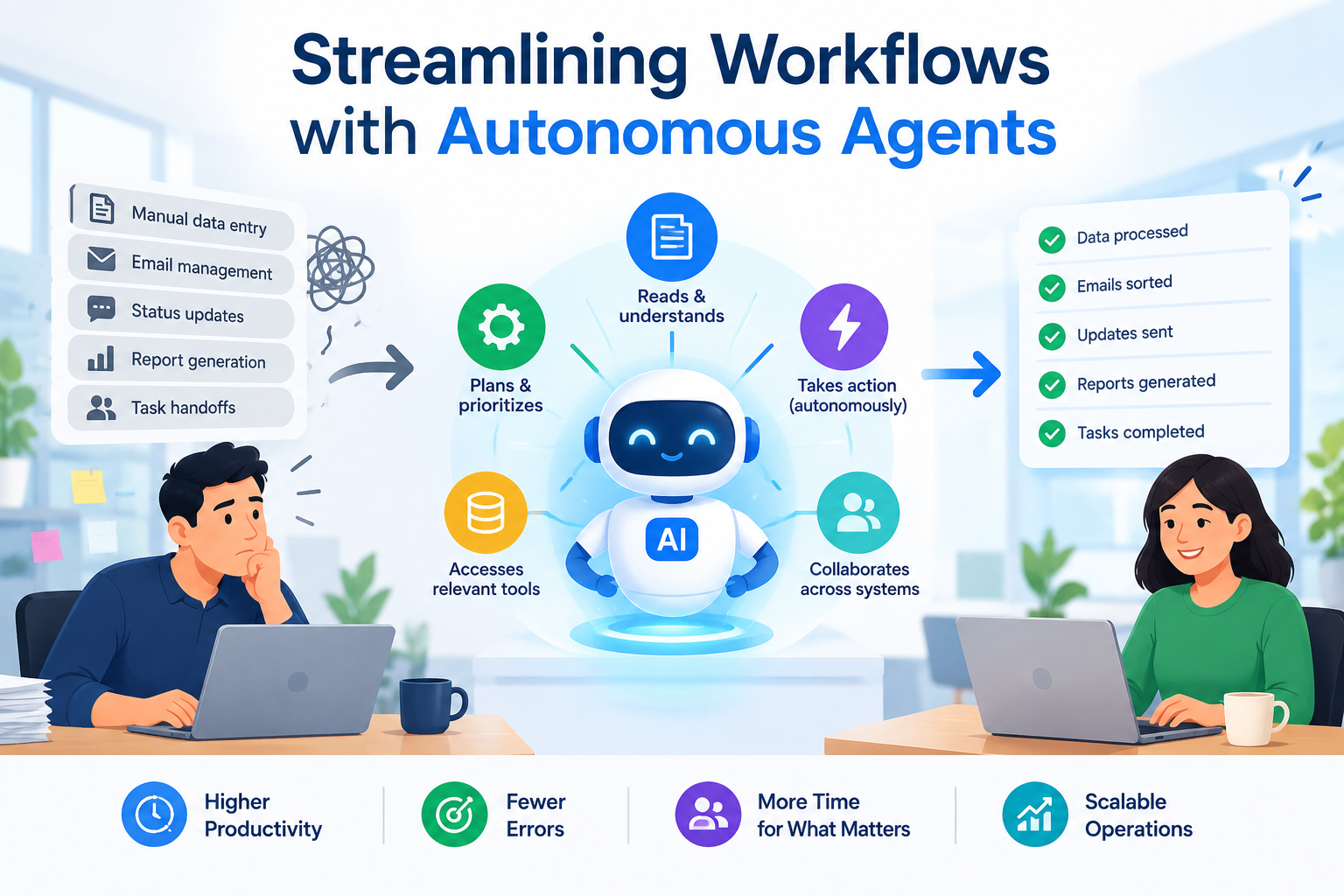
3. Streamlining Workflows with Autonomous Agents
Marketing operations are increasingly supported by modular automation agents that handle multi-step workflows.
-
Task Orchestration: Single workflows can seamlessly connect competitor research, content brief formulation, multi-platform variation testing, and performance reporting.
-
The Human Checkpoint: Successful teams maintain strict oversight—using automation for rapid production while keeping human editors in charge of final approvals, brand alignment, and budget caps.
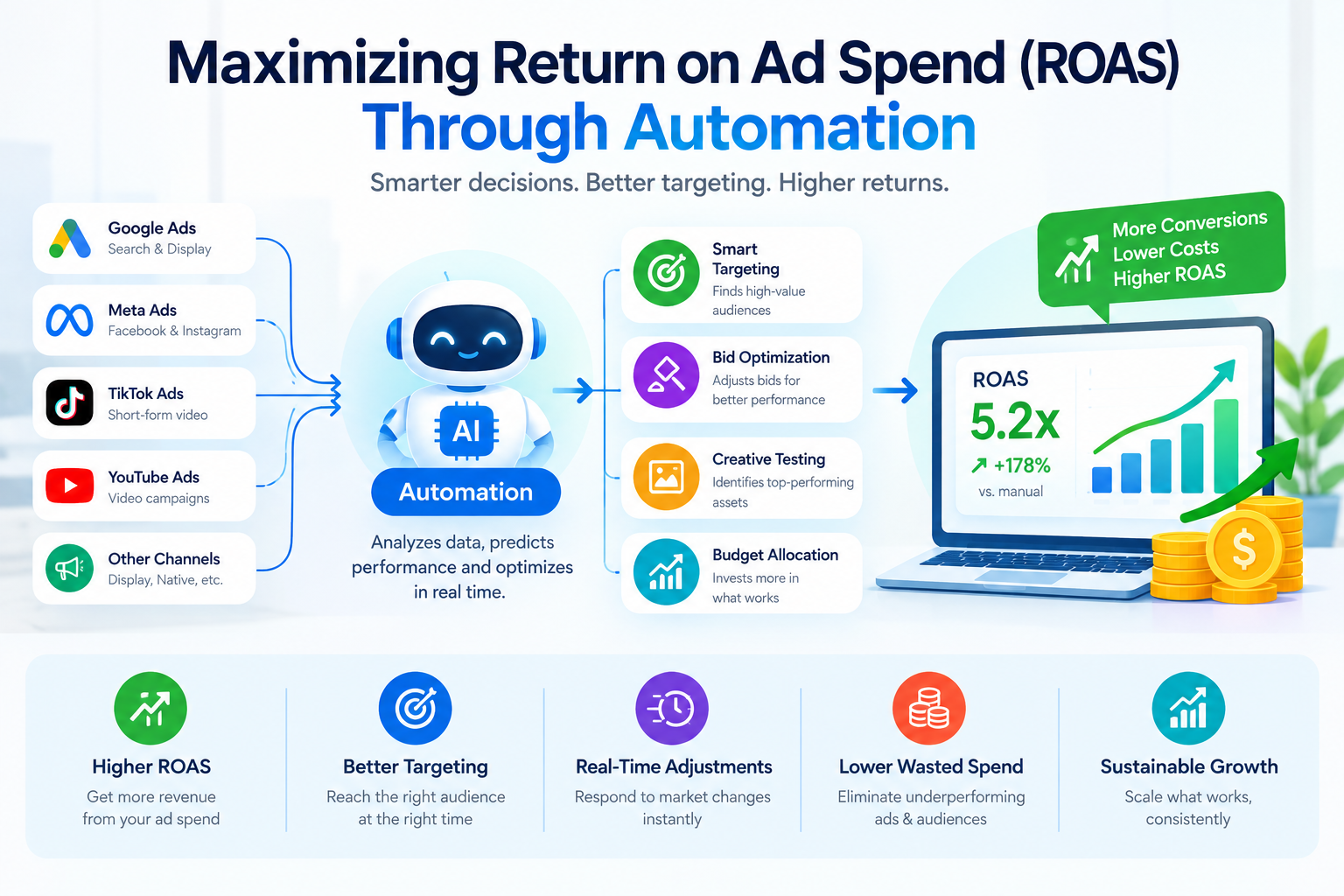
4. Maximizing Return on Ad Spend (ROAS) Through Automation
Paid acquisition channels rely less on manual, button-level micro-adjustments and more on feeding high-quality creative inputs into algorithmic bidding models.
-
Creative Variety: Advertisers scale success by producing multiple distinct visual and angle variations, leaving the platform to test and distribute budget toward top performers.
-
Upstream Focus: Marketers shift their energy toward landing page speed, offer design, messaging clarity, and conversion tracking accuracy rather than exhausting time on manual keyword tweaking.
When everyone has access to the same foundational tools, execution quality becomes the ultimate differentiator.
-
Inject Original Insights: Pair technological efficiency with firsthand experiences, proprietary data, and distinct brand opinions that automated models cannot replicate.
-
Enforce Rigorous Editorial Standards: Treat initial outputs as raw material. Review, refine, and ground every claim in verifiable truth before it reaches your audience.
Conclusion
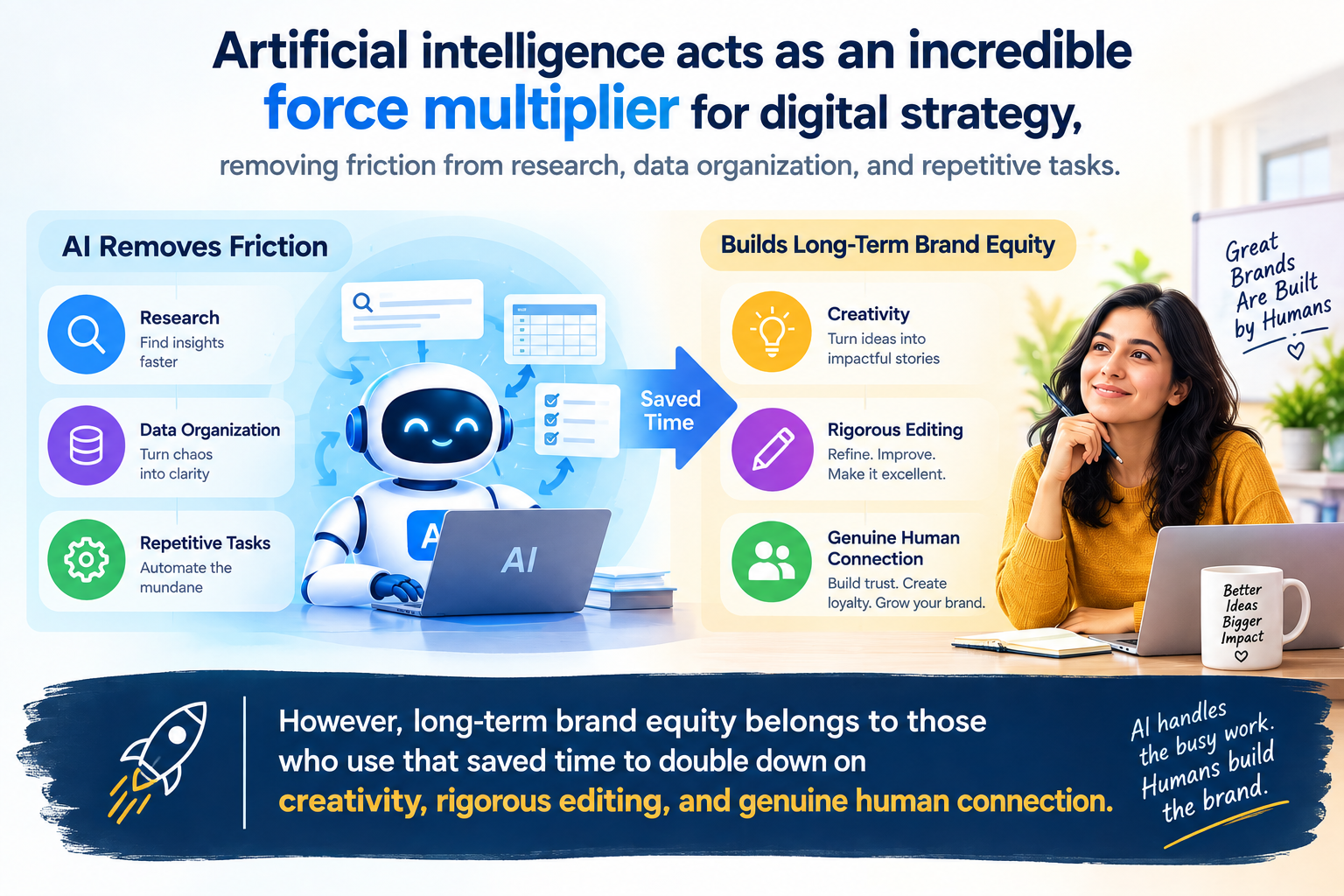
Artificial intelligence acts as an incredible force multiplier for digital strategy, removing friction from research, data organization, and repetitive tasks. However, long-term brand equity belongs to those who use that saved time to double down on creativity, rigorous editing, and genuine human connection.